
.png?width=50&name=Untitled%20(400%20x%20400%20px).png)

If you have ever thought, “I’m not a writer,” you are not alone.
Every family has their traditions
Ours has always been a simple one.
Every April, when the bluebells start to appear, we go to Bradley Woods.
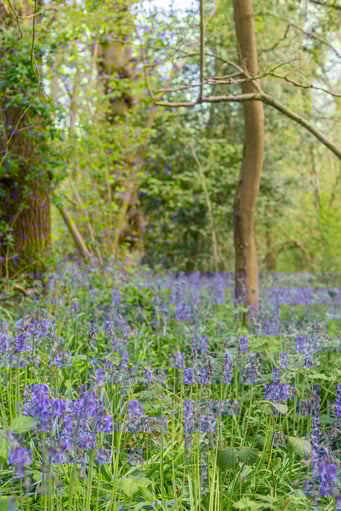
Over the years, that visit became tied to our dogs. Each one of them, at some point, would be taken into the woods and sat among the bluebells for a photo. A kind of unofficial family record.
It sounds simple. It never really was.
If you’ve ever tried to get a dog to sit still in a woodland full of smells, trees to investigate and endless places to explore, you’ll know it requires a fair bit of patience. There was always more sniffing than sitting, more wandering than posing. But somehow, over the years, we always managed to get a few photos that felt worth keeping.
When I got my own dog, a yellow Labrador called Becks, he had his turn too. Another photo, another small moment added to the collection.
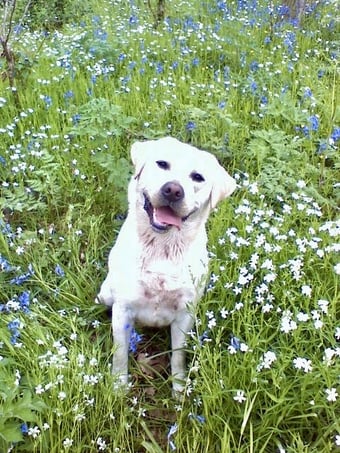
Now we have Sid.
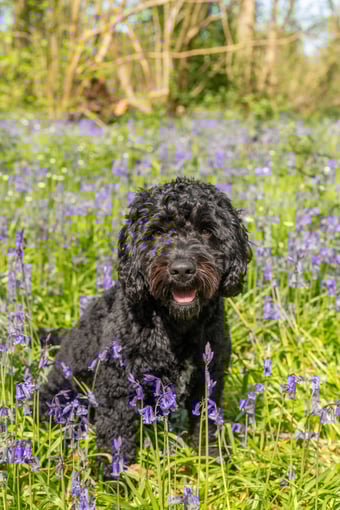
Sid isn’t technically ours. He belongs to Gary’s daughter, Freya, and her partner James. He’s a cockapoo, ten months old, and full of energy in the way only a young dog can be. We call him our grand pup, and we look after him often enough that he feels very much part of our everyday life.
On Monday, Gary and I decided it was time to take him to the woods and carry on the tradition.
The moment we arrived, Sid knew exactly where he was. Before we’d even opened the car door, he was squealing with excitement, desperate to get out and explore. And once he did, that was it. Even on his extendable lead, he was off. Sniffing, exploring, leaving his mark on anything he could find.
Eventually, we made our way to the parts of the woods where the bluebells had taken over.
If you’ve ever seen it, you’ll know how it feels. The ground covered in blue, the light coming through the trees, everything just a little bit quieter.
It really is beautiful.
Gary had his camera with him, so we spent some time trying to get the photo. It wasn’t easy. Sid had far more important things to do than sit still and pose. But we got there in the end. A couple of photos that captured him just enough.
And with that, the tradition continued.
As we walked, it brought a lot of other memories back.
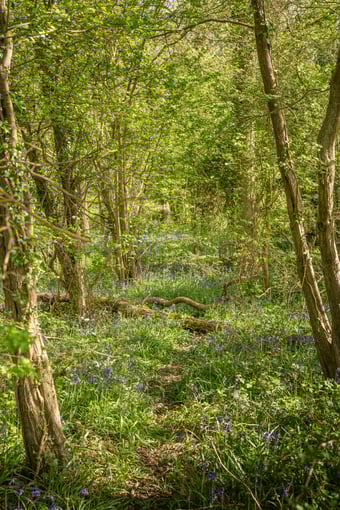
I spent a lot of time in those woods growing up. My birthday is in July, and more than once I asked to have my party there. My dad had a trailer he used for the shop, and somehow, we all thought it was the best thing in the world to pile into the back of it and be driven to the woods. There would be about ten of us, all squeezed in, laughing the whole way. It probably wouldn’t happen now, but at the time it felt like an adventure.
We would arrive, the back would open, and we would all jump out and disappear into the trees.
I also remember going there with my dad and my sisters at weekends. It was one of his favourite places to take us. We would climb over fallen trees, swing from branches, and he would tell us stories about the woods as we walked.
It’s one of those places that holds more than just what you can see.
And that’s the thing about stories.
Most people think they don’t have anything to share. That their work or their life isn’t particularly interesting. But stories aren’t about big moments. They’re about places, people, habits, small traditions that quietly repeat over time.
A walk in the woods.
A family routine.
A photo that gets taken every year without much thought.
Those are the things people connect to.
They help someone recognise something of their own life in yours. They remind people of places they’ve been, or things they used to do. Maybe this will remind someone of their own visits to the woods. Or prompt them to go and see the bluebells this weekend.
That’s why storytelling matters.
Not because it’s polished or strategic, but because it’s real. It gives people something to hold onto. Something that feels familiar.
It’s also why my work has moved more in this direction.
Because helping organisations and community projects tell these kinds of stories, in a way that feels natural and honest, is far more powerful than trying to say the right thing.
And often, the stories are already there.
They just need noticing.
What stories could you be telling?
If you’re part of an organisation, a partnership or a community project, your stories might already be happening every day.
They might look like:
The story of how something started
The people behind the work
The small moments of progress that often go unseen
The impact on individuals or the wider community
The everyday reality of what it takes to keep things going
The places and spaces that bring people together
These are the stories that help people understand what you do and why it matters.
They can be shared in simple ways across:
Social media posts that show moments as they happen
Blogs that take a little more time to tell the full story
Emails or newsletters that keep people connected over time
Short videos or podcasts that bring voices and experiences to life
And when those stories are captured well, they don’t just inform people. They build trust, recognition and a sense of connection.
Working together
This is the work I now focus on.
Through my storytelling and communications support, and in partnership with Gary Davies Photography, we help organisations plan, capture and share their stories in a way that feels real and consistent.
That might include spending time with your team or community, capturing conversations, taking photographs or filming, and turning those moments into content you can use across your channels.
Not in a way that feels staged or overly polished, but in a way that reflects what is actually happening.
If you’re doing meaningful work and want to share it more clearly and consistently, you can explore how we can work together by emailing me at Jose@josedavies.com
Or you can connect with me on LinkedIn where I share regular reflections on storytelling, communication and place-based work.